Portfolio landlord conveyancing in Walsall: fees and costs

Updated: 1 day ago
It’s understandable to want a clear figure before committing, especially when buying, selling or remortgaging investment property. Start by separating legal fees from disbursements and other costs, then consider which checks apply to each property.
This guide explains what can affect conveyancing costs in Walsall, how local searches and lender requirements fit into a transaction, and what to expect through to completion. You’ll get a clearer picture of the cost factors and steps involved before deciding how to proceed.
Table of Contents
How a conveyancer supports a portfolio landlord buying a property
A conveyancer coordinates title checks, searches, contract enquiries and registration for each purchase. For a landlord adding a Walsall property, the work also needs to account for its tenure and any existing occupation.
Local searches and turnaround times
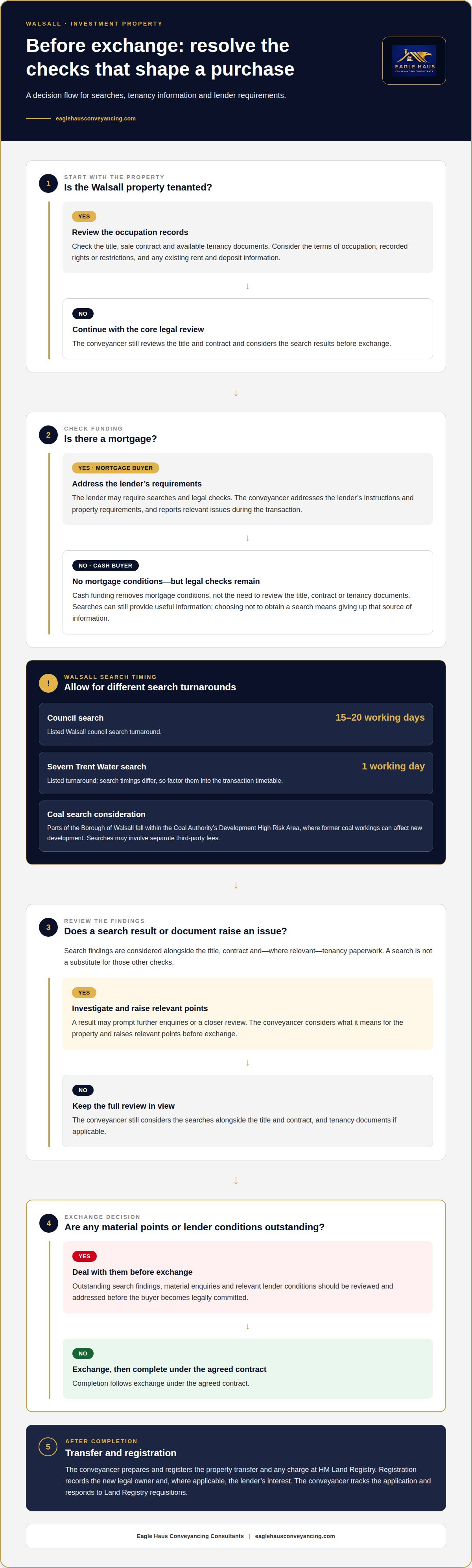
Local searches reveal matters recorded by the council and other search providers that may affect a property. In Walsall, the council search turnaround is listed as 15 to 20 working days, so the conveyancer factors this into the transaction timetable. Search results are reviewed alongside the title and seller’s information, with relevant issues raised before exchange.
Residential sales and purchases
Residential conveyancing solicitors handling purchases and sales can support portfolio landlords in Walsall. For a purchase, the conveyancer reviews the title, contract and search results, then raises enquiries about anything needing clarification. For a sale, they prepare the contract papers, respond to enquiries and arrange the transfer of ownership. For leasehold property, reviewing the lease helps identify obligations that affect ownership and ongoing costs.
Risks of tenanted portfolio transactions
For a tenanted sale, the conveyancer reviews tenancy documents, rent information and deposit records, then shares relevant details with the buyer’s conveyancer. Checking these records helps account for existing tenancies, deposits and rent in the transaction. Incomplete or inconsistent information can delay enquiries or leave important terms unclear.
Risks when buying or selling a tenanted portfolio include unclear occupancy terms, missing records and property issues that affect the buyer’s plans. Walsall Council’s landlord information identifies the Renters’ Rights Act 2025 as relevant to landlords and tenants. The conveyancer considers the transaction documents and flags matters requiring resolution before exchange.
Property condition and safety information also matter. The Gas Safety (Installation and Use) Regulations 1998 cover annual gas safety checks in rented accommodation, according to UK legislation. The Health and Safety Executive says gas safety records for rented accommodation must be kept for at least 2 years. The UK Government states an Energy Performance Certificate is valid for 10 years.
The UK Government states that the risk-based measure is set out in regulation and covers a range of 21 potential hazards. These checks and records help inform due diligence, but they sit alongside the conveyancer’s review of title, searches and contract terms. A transaction involving several properties needs clear property-by-property records so an issue at one address does not go unnoticed.
After completion, the conveyancer prepares and registers the property transfer and any charge at HM Land Registry. Registration records the new legal owner and, where applicable, the lender’s interest. The conveyancer tracks the application and responds to Land Registry requisitions, completing a key final step in the purchase.
Conveyancing searches and lender requirements
Searches help identify matters affecting a Walsall property before exchange. For a tenanted purchase, solicitors also review the title and tenancy documents, while a mortgage lender may set additional requirements.
Searches and third-party fees
Searches are enquiries with councils and service providers, and their findings inform the conveyancer’s advice and contract enquiries. In Walsall, a Severn Trent Water search has a listed turnaround of 1 working day. Council search timings differ, so results need to be considered alongside the transaction timetable rather than treated as a single search package.
Searches can involve separate third-party fees. Parts of the Borough of Walsall fall within the Coal Authority’s Development High Risk Area, where former coal workings can affect new development.
A search result may prompt further enquiries or a closer review of a particular issue. The conveyancer considers what each result means for the property and raises relevant points before exchange. Search findings do not replace checks of the title, contract or tenancy paperwork.
Legal checks for tenanted properties
When buying a tenanted Walsall property, the conveyancer reviews the title, sale contract and available tenancy documents. These checks help establish the ownership being transferred, the terms of occupation, and any recorded rights or restrictions. Existing tenancy and deposit information also needs to be considered.
A mortgage buyer has an additional step: the lender’s instructions and property requirements must be addressed before exchange. The lender may require searches and legal checks as part of its decision to lend. Solicitors report relevant issues during the conveyancing process, so a search finding or title point can affect both the purchase and the mortgage.
A cash buyer does not have mortgage conditions to satisfy, but searches can still provide useful information about the property and its surroundings. Choosing not to obtain a search means giving up that source of information, so the conveyancer explains the implications within the transaction. Cash funding does not remove the need to review the title, contract or tenancy documents.
Search results and lender requirements can affect when it is appropriate to exchange. Before exchange, the conveyancer reviews outstanding search findings, answers material enquiries and checks that lender conditions have been addressed where relevant. Completion follows exchange under the agreed contract, so unresolved points should be dealt with before the buyer becomes legally committed.
Buying, selling and remortgaging process
Each residential transaction follows a sequence, from instruction and document gathering to completion and registration. For a Walsall portfolio landlord, the process depends on whether the property is being bought, sold or refinanced.
For a purchase, the conveyancer receives the offer details and opens the file once instructed. They review the draft contract and title, arrange searches, raise enquiries and report relevant findings. If there is a mortgage, the lender’s instructions must also be addressed before the transaction can progress towards exchange.
The buyer arranges the deposit and completion funds in line with the transaction timetable. The deposit at exchange is usually 10% of the purchase price. After exchange, the conveyancer coordinates completion and deals with the post-completion work, including any Stamp Duty Land Tax steps and registration at HM Land Registry.
A sale follows a different sequence. The conveyancer prepares the contract pack, gathers property information and responds to enquiries from the buyer’s side. For a tenanted home, tenancy and deposit records are part of the information needed to progress the sale. At completion, the conveyancer handles the transfer and any relevant mortgage repayment arrangements.
If a landlord sells one property while buying another, both files need coordinated dates and funding. A linked sale and purchase depends on the readiness of the other parties, so a delay in one transaction may affect the planned move. In Walsall, a property chain can move only as quickly as its slowest participant. Clear updates on outstanding enquiries and funds help keep connected transactions aligned.
Remortgaging changes the mortgage secured against a property without transferring ownership to a new buyer. The conveyancer checks the title, follows the new lender’s instructions and arranges registration of the replacement charge at HM Land Registry. Existing borrowing must be accounted for as part of the legal work. Walsall property solicitors can assist with mortgages and remortgages, including the conveyancing steps involved in changing lender.
Timing varies with search results, lender requirements, title issues and the number of linked transactions. Most residential conveyancing transactions in Walsall complete within 12 weeks, though a chain can extend the process. The conveyancer provides an estimate based on the case and updates progress through to completion, helping landlords plan around property and financing arrangements.
Eagle Haus supports clients buying freehold property. Raise the intended ownership arrangement when discussing the transaction so the conveyancing instructions reflect the property being purchased. The appropriate steps depend on the individual purchase and its requirements. Clear purchase details give the conveyancer a basis for explaining the work and how it fits your plans.
Conveyancing fees and additional costs
To budget for a Walsall property transaction, separate the conveyancer’s legal fee from disbursements and other property costs. The final amount depends on the work involved, property tenure, lender requirements and title complexity.
Solicitors in Walsall set legal fees according to the transaction being handled. A purchase, sale or remortgage can require different work, while a leasehold title may involve extra enquiries and management information. For this service, the price depends on the case and is given after a quote request; relevant factors include tenure, transaction type, title complexity and lender requirements.
Disbursements and property-specific costs
Disbursements are payments made to third parties during the conveyancing process.
Leasehold transactions can involve further costs. A management pack provides information needed for the conveyancing matter, and its cost is separate from the legal fee. The lease and management arrangements determine whether this expense applies.
Ask for a written breakdown showing which items are legal fees, disbursements or other costs. This makes it easier to understand what each payment covers and compare the expected total with available funds. For a portfolio with several titles, each property’s tenure and registration position can affect the overall budget.
Conveyancing versus letting-only fees
Conveyancing solicitors handle legal work connected with buying, selling or remortgaging a property. Letting-only services concern the rental relationship, not the legal transfer or mortgage registration. These are separate types of work, so a letting fee should not be treated as part of a conveyancing quote.
For example, a landlord buying a tenanted flat may have conveyancing costs and a leasehold management-pack cost, alongside separate costs for managing the rental. The West Midlands location does not combine these into one fee. A clear breakdown helps distinguish purchase costs from those relating to ongoing housing arrangements.
When reviewing a quote, match each charge to a specific step, such as legal work, identity checks, registration or leasehold information. This helps portfolio landlords plan cash flow across purchases without assuming every Walsall property will incur the same additional costs.
For a Walsall leasehold flat, checks can include reviewing the lease, service charge and the case for a lease extension.
Conveyancing for buying and selling homes in Walsall
Walsall homes include houses and flats, and each property needs legal checks suited to its title and type. For a portfolio landlord, the key distinction is whether the transaction concerns a freehold house, leasehold flat or new-build purchase.
Freehold houses and leasehold flats
For a freehold house, conveyancing checks focus on the title and boundaries. The conveyancer compares the legal description with the transaction documents and raises enquiries if information needs clarification. This helps establish what land and rights transfer with the property, rather than assuming the sale covers everything visible on site.
A leasehold flat requires a different review. The conveyancer examines the lease, service charge information and, where relevant, the case for a lease extension. These details can affect the buyer’s obligations after completion. If a landlord is buying several flats, each lease needs separate review because terms and management arrangements can differ.
New-build purchases and property sales
A new-build purchase in Walsall involves checks on the developer’s contract, road adoption and any estate charge. The contract sets out the purchase terms, while adoption and estate arrangements can affect future access or costs. Reviewing these points before exchange helps the buyer understand the commitments attached to the home.
For a sale, the conveyancer prepares contract papers and provides property information for the buyer’s review. If more than one home is included, the legal work still needs to account for each title and its details. A leasehold flat requires lease information, while a freehold house calls for attention to title and boundaries.
From searches to registration
The Walsall conveyancing process covers local searches, exchange and completion, followed by any relevant Stamp Duty Land Tax steps and registration at HM Land Registry. Search results and legal enquiries help identify points to resolve before exchange. Completion transfers ownership under the contract, while registration records the change at the Land Registry.
An auction transaction has a different commitment point: in the UK, the sale or purchase becomes legally binding when the auctioneer accepts the bid. Review the legal pack before bidding, rather than treating the checks as work to begin afterwards.
For a portfolio landlord, organise the conveyancing by property type and title. A flat’s lease, a house’s boundaries and a new-build estate charge raise different questions. Keeping each property’s documents distinct also helps the conveyancer track enquiries and progress across connected purchases or sales.
If you’re planning a Walsall purchase or sale, discuss your property transaction with a conveyancing professional.
Eagle Haus Conveyancing Consultants
Eagle Haus supports property investors with residential purchases and sales, remortgages, transfers of equity and company purchases. Whether you’re adding a Walsall home to your portfolio, selling a tenanted property or refinancing, the conveyancing work can be tailored to the transaction and ownership structure.
For a company purchase, legal support helps progress the property transaction in the company’s name. If ownership is changing between people, a transfer of equity may be relevant. For a remortgage, the conveyancing process addresses the lender’s legal requirements and registration of the new charge.
Share the transaction type and property details to begin a conversation about the legal work involved. Contact Eagle Haus Conveyancing Consultants to discuss your property transaction.
Plan your next property move with clarity
Use your next transaction to align a property decision with the way you hold and manage your portfolio. Before proceeding, consider the intended ownership structure, how the property fits your plans and which legal steps need coordinating. For property entrepreneurs who also operate broader commercial ventures, engaging high-value audiences through targeted platforms like Reach Africa is just as critical as establishing sound legal foundations. A clear starting point helps focus decisions, whether you’re preparing to buy, sell or change finance arrangements.
For portfolio landlord conveyancing in Walsall, an early discussion can clarify the work involved and the information needed. Eagle Haus supports property transactions in Staffordshire, Wolverhampton, Telford, Birmingham, Shropshire, Cannock and Walsall, including residential purchases and sales, transfers of equity and remortgages.
When you’re ready to discuss your next step, contact Eagle Haus Conveyancing Consultants. A practical conversation can help you move forward with greater clarity and confidence.
Frequently Asked Questions
How Much Does Conveyancing Cost in Walsall?
There isn’t one fixed total for every Walsall property transaction. For portfolio landlord conveyancing in Walsall, the estimate depends on the legal work and applicable third-party costs, such as searches or registration. Request a free, no-obligation quote with a breakdown showing how each property’s tenure, ownership structure and transaction type affect the estimate. Fixed fees are based on the information supplied, and additional fees may arise if it is incomplete or inaccurate.
What is the conveyancing process?
It starts with instructing a conveyancer and providing the information needed to open the matter. You may need to provide documents explaining the source of your funds as part of this preparation. If funds have moved, the full evidence trail and supporting bank statements are required. The conveyancer then progresses the legal work towards exchange and completion.
How do conveyancing costs vary for multiple-property or portfolio transactions?
Costs depend on whether the properties can be handled as connected transactions or need separate legal work. For example, a portfolio containing a freehold house and a leasehold flat involves different title documents and property information. Separate lenders, ownership structures or completion dates can also affect the work. A property-by-property estimate clarifies which costs relate to each transaction and where requirements differ.
What conveyancing steps does a professional handle for a portfolio landlord buying several properties?
For portfolio landlord conveyancing in Walsall, the legal work needs to be organised around each property, rather than treating a group purchase as one file. The conveyancer checks that the buyer and ownership structure are correctly reflected in the transaction documents, coordinates enquiries and tracks completion arrangements. If a purchase is made through a company, its role must be addressed alongside the property-specific work.
How long does portfolio landlord conveyancing typically take in Walsall?
Eagle Haus states that a transaction typically takes between 8 to 12 weeks and can vary depending on complexity and external chain delays. Several properties may progress at different speeds if their searches, title matters or funding arrangements differ. A linked sale can also affect the timetable. An estimate is most useful when it reflects the specific transactions and their dependencies, rather than assuming every property will complete together.



Comments