Local property searches in Walsall: costs and what they reveal

A local authority search can uncover restrictions and proposals that a viewing won’t show. For buyers, a local property search explained for Walsall means checking official records for matters that could affect the property or plans for the area, including planning decisions, road schemes and legal notices.
It’s understandable to want clear figures and a straightforward timeline before making a major purchase. A local authority search typically takes 2 to 6 weeks, and mortgage lenders use the results when assessing a purchase. This guide explains what the Walsall search covers, what it may reveal, how its cost is made up and why the findings matter to buyers and lenders.
Table of Contents
What are local authority searches - also known as property searches?
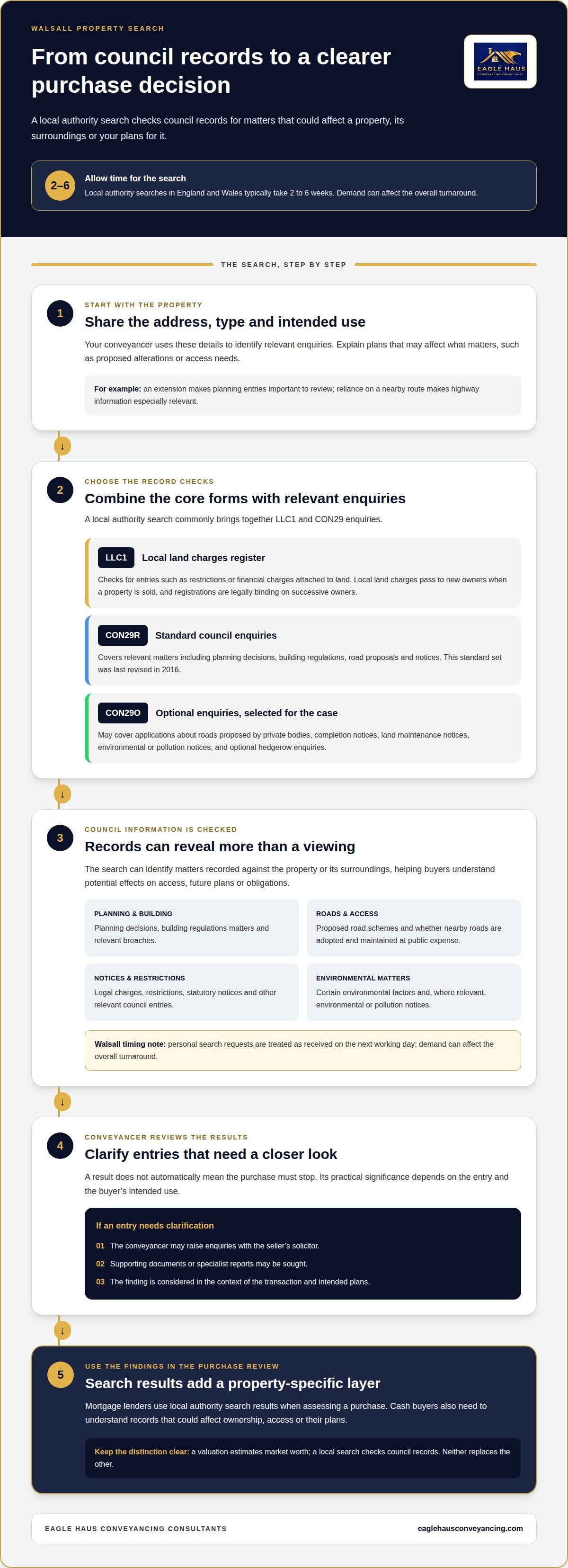
A local authority search checks council records for information affecting a property and its surroundings. A local property search explained for Walsall buyers brings together register checks and council enquiries before a purchase proceeds.
LLC1 and CON29 search forms
A local authority search commonly combines LLC1, which checks the local land charges register, with CON29 enquiries about the property and surrounding area. According to the UK legislation register, councils in England and Wales maintain local land charges registers under the Local Land Charges Act 1975.
LLC1 entries can include restrictions or financial charges attached to land. Local land charges pass to new owners when a property is sold, and LLC1 registrations are legally binding on successive owners. The CON29 enquiries add council information, helping buyers understand matters beyond the register itself. Together, the forms give the conveyancer records to assess against the purchase.
Standard and optional council enquiries
CON29R is the standard set of local authority enquiries, last revised in 2016. It covers relevant matters such as planning decisions, building regulations, road proposals and notices. These enquiries help identify council records that may be relevant to the property or its surroundings.
CON29O is an optional form for additional enquiries chosen where the topic suits the property or buyer’s plans. It can cover applications about roads proposed by private bodies, completion notices, land maintenance notices, and environmental or pollution notices. Optional hedgerow enquiries in England and Wales may concern protections under the Hedgerows Regulations 1997.
Arranging a Walsall local search through a conveyancer
Your conveyancer arranges the search using the property address, type and intended use. These details help identify relevant enquiries rather than treating every property the same. Provide the address and explain plans that could affect which council information matters, such as proposed alterations or access needs.
For example, if you plan to extend the home, relevant planning entries are important to review. If the property relies on a nearby route, highway information deserves close attention. Walsall Council treats personal search requests as received on the next working day, while demand can affect the overall turnaround.
Risks revealed by local search results
A local property search explained for Walsall buyers can reveal a charge or restriction, planning matters, a statutory notice or a proposed road scheme. It can also show whether nearby roads are adopted and maintained at public expense. These records may affect expectations about access, future plans or obligations linked to the property.
A result does not automatically mean a purchase must stop. If an entry needs clarification, the conveyancer may raise enquiries with the seller’s solicitor or seek supporting documents and specialist reports. An assets of community value listing under the Localism Act 2011 is one example of a record that may need closer review. Its practical significance depends on the entry and the buyer’s intended use.
Why property searches matter to UK home buyers
Your conveyancer can arrange a Walsall local search as part of the purchase and review the results alongside the transaction details. This gives you and your solicitor a clearer basis for considering property-specific risks before proceeding.
A sale price alone doesn’t show every issue that could affect a home or its future use. A valuation estimates market worth; a local search checks council records for entries relevant to the property. Neither replaces the other. For example, you may agree a price that reflects local demand but still need to understand a planning decision or notice recorded against the address.
Walsall’s market figures provide useful context, but they aren’t a valuation of any particular home. The average house price was £221,000 in September 2026, up 5.6% from September 2025. In the same month, the average first-time buyer price was £203,000, while the average price paid for a home bought with a mortgage was £225,000.
Those figures describe different groups and purchase circumstances. The average price for a terraced property in Walsall was £195,000 in September 2026; flats and maisonettes averaged £124,000. A buyer comparing a specific home with these figures should remember that property type and individual features affect its value. Search results add a separate layer of information about matters recorded by the local authority.
Mortgage and cash buyers can both benefit from this additional information. Lenders use local authority search results when assessing a purchase, so your conveyancer considers relevant entries as part of the transaction. As a cash buyer, you won’t have a mortgage lender assessing the results, but you still need to understand information that could affect ownership, access or your plans. Paying without a mortgage doesn’t turn a search into a valuation or remove the value of checking council records.
Local prices can also shift over time, so a broad average cannot establish what a buyer should offer. The September 2026 rise in Walsall’s average house price describes a change across the market, not the condition or legal position of one address. A search helps focus the review on that address, while the agreed price reflects the property and the negotiations between buyer and seller.
For buyers weighing search findings against a purchase decision, speak with a conveyancer about how the results fit the transaction.
Planning, highway and environmental information
For a Walsall residential purchase, search results connect council records with planning, roads and environmental risks. Each result relates to a specific property or nearby area, helping you identify matters that may affect your plans.
CON29 enquiries cover relevant planning decisions, proposed roads and rail schemes, statutory notices, planning or building regulations breaches, compulsory purchase orders and certain environmental factors. A recorded planning enforcement matter may relate to the Town and Country Planning Act 1990. For example, a buyer considering an extension can ask their conveyancer to assess relevant planning entries and notices alongside the proposed work.
Highway information can distinguish public roads from routes without public maintenance at public expense. The search can also reveal proposed road schemes or applications concerning roads proposed by private bodies. These details may matter if access to the home depends on a particular route, or if a changing road proposal could affect how you use the surrounding area.
Environmental checks address different risks from planning records. The contaminated land check considers whether land in England and Wales appears on a council register under Part 2A of the Environmental Protection Act 1990. Separately, environmental searches usually screen for flood risk from rivers, seas, surface water and groundwater. A flood-risk flag can prompt buyers to review past insurance claims, obtain insurance quotes and consider a more detailed flood report.
Other searches may provide information that the local authority search does not cover. Conveyancing searches commonly include water and drainage, environmental and applicable chancel repair checks. Location-specific reports can cover mining or infrastructure. For information about sewers and drains in Walsall, buyers can obtain a drainage and water search from Severn Trent. A mining report may be relevant if the property’s location makes that issue pertinent.
Each result answers a different question. A planning entry concerns decisions or enforcement; a highway entry concerns routes and proposals; an environmental flag points to risks needing further consideration. They don’t all mean the same thing, and each result should be read in context. For instance, a flood flag is a reason to examine insurance and the report details, not a finding that the property has flooded.
When an entry raises a concern, your conveyancer can raise enquiries with the seller’s solicitor or seek supporting documents and specialist reports. This follow-up helps clarify what the record means for your specific purchase, whether you intend to live in the property or use it differently.
Search costs and turnaround times
Walsall Council’s listed fees apply from 1 April 2025. The total combines the register check and council enquiries, so buyers can see what the full search includes before buying.
The separate fees show how that total is made up. These charges apply to the listed Walsall fees from 1 April 2025; additional properties have separate fees.
Timing needs similar attention. A local authority search in England and Wales typically takes 2 to 6 weeks. The government target for returning searches in 2026 is a maximum of 10 working days, but actual processing can differ. Walsall Metropolitan Borough Council was reported to take 25 working days on 19 August 2025, a dated figure rather than a current guarantee.
Demand can affect when results arrive. Walsall Council provides the local land charges register for a personal search within the same turnaround time as an official local authority search, though demand can change the wait. Regulated personal searches can often return within 2 to 5 working days, but that general timeframe should not be confused with Walsall Council’s own processing time.
Search timing can affect the pace of a purchase. If the search is ordered after an offer is accepted, its return may affect when your conveyancer can review council information and raise follow-up enquiries. The expected timescale depends on the search route and current demand. Results may also need to be recent enough for your mortgage lender at completion: many UK lenders prefer searches to be no more than a few months old.
Other reports involve separate costs and timescales. They cover different information, so the property’s location and your intended use help determine which are relevant alongside the local authority search.
How does a conveyancer arrange a local property search in Walsall?
Your conveyancer arranges the search using the property details and your plans. Supply the address, confirm the property type and explain its intended use. This helps shape enquiries around the specific Walsall property rather than a generic search.
The address identifies which local authority records are relevant. Property type also matters because Walsall Council’s fees distinguish residential searches from commercial property or land searches. If your purchase covers more than one property, your conveyancer needs details for each address, as additional-property fees may apply.
Intended use can help determine which enquiries are useful. A buyer planning alterations may need relevant planning information considered closely. For a property with access onto a nearby road, highway information may be particularly relevant. Optional CON29O enquiries can be added when their subject matter fits the property or the buyer’s plans.
Once the scope is clear, your conveyancer submits the search request through the chosen route and tracks its progress. Walsall Council treats personal search requests as received on the next working day. Turnaround can vary with demand, so the date a request is treated as received may differ from the date the results arrive.
Although buyers can conduct a personal local authority search for free, specialist knowledge matters when searching and interpreting local reports. Your conveyancer can review the returned entries, identify points needing clarification and raise enquiries with the seller’s solicitor. Supporting documents or specialist reports may also be requested when a result needs further investigation.
Keep the information you provide consistent throughout the transaction. For example, a change to the property address or intended use may affect which enquiries are relevant. Clear details from the start help your conveyancer request a search suited to the purchase and assess the findings in context.
Search results form part of the wider conveyancing review, not a standalone decision about whether to proceed. Your conveyancer considers each entry against the property, your plans and other transaction documents. If an entry raises a concern, follow-up enquiries can clarify its practical implications before the purchase moves forward.
For support with a Walsall purchase and its property searches, arrange conveyancing support.
Eagle Haus Conveyancing Consultants
Eagle Haus Conveyancing Consultants supports people through residential purchases and sales, where local search findings form part of the wider conveyancing picture. If a Walsall search raises questions about a notice, planning entry or highway information, conveyancing support can help you understand how that information relates to the transaction and what follow-up may be needed.
Eagle Haus also supports transfers of equity, remortgages and company purchases. Remortgage assistance is available on the majority of lenders’ panels. Seek help when buying or selling, or when search results need to be considered alongside your property plans and transaction documents. Understanding the findings can help you make informed decisions as the process moves forward.
For support with your property transaction, contact Eagle Haus Conveyancing Consultants.
Make your next property decision with clarity
A local property search explained for Walsall is most useful when its findings are considered against the decision you need to make next. Before moving forward, identify which points need answers, which documents could clarify them and whether anything changes your plans for the property. This gives your conveyancer a clear focus for follow-up and keeps decisions connected to your priorities.
Not every search entry is a reason to abandon a purchase. The next step is to understand its practical effect, resolve outstanding questions and decide how you wish to proceed. Keeping the process focused can make a complex transaction easier to manage.
If you’re ready to discuss your property transaction and the support you need, contact Eagle Haus Conveyancing Consultants. A clear conversation can help you move towards your next step with confidence.
Frequently Asked Questions
What searches are done during conveyancing?
The searches needed depend on the property and its location. They commonly include local authority, environmental, drainage and water searches, plus an applicable chancel repair search. A mining or infrastructure report may be relevant in a particular area. These reports cover different records and risks, so your conveyancer considers the property and intended use when deciding which checks form part of the transaction.
How long do local searches take when buying a house this year?
For a Walsall purchase, local authority searches typically take 2 to 6 weeks. The 2026 government target is a maximum of 10 working days, but processing can take longer. Walsall Metropolitan Borough Council was reported to take 25 working days on 19 August 2025. A conveyancer can factor in the search route and council demand when considering the transaction timetable.
How long do searches stay valid?
Most property searches in the UK have no single statutory expiry date. Lenders commonly assess how long ago the search was issued, and many treat local authority results as valid for 3 to 6 months from issue. If a transaction takes longer, the lender’s requirements can affect whether results remain acceptable at completion. The relevant timing is therefore linked to the lender and purchase, not one universal expiry rule.
Property Searches Explained: What Happens When Buying a Home?
During a purchase, your conveyancer orders relevant searches, reviews the returned information and follows up on entries needing clarification. Search results are one part of the legal checks, not a survey of the building’s physical condition. For example, a council record may identify a planning matter, while a survey addresses the property’s condition. Your conveyancer uses the findings to inform enquiries before the transaction proceeds.
What’s the difference between official searches and personal searches?
An official search is requested from the local authority, while a personal search involves a searcher checking the relevant council records. In Walsall, the council provides a copy of the local land charges register for a personal search within the same turnaround time as an official search, although demand can affect timing. Your conveyancer can review the information in the context of the purchase.
What is a local property search in Walsall?
It’s a check of local authority records relating to a property in Walsall and its surroundings. The search combines the LLC1 local land charges register check with CON29 council enquiries. Together, these can bring relevant recorded matters to light for a buyer and their conveyancer. The search concerns public records; it doesn’t replace a survey or establish the building’s physical condition.
What information does a Walsall local authority search reveal?
A local authority search can reveal relevant planning decisions, building regulations matters, statutory notices, road proposals and whether nearby roads are publicly maintained. Environmental information may also flag matters such as contaminated land. The search doesn’t provide a full drainage assessment, so sewer and water details are covered by a separate drainage and water search. Your conveyancer can explain which findings need further enquiries or documents.
How much does a local property search cost in Walsall?
These are local authority search charges. Other reports, such as drainage or environmental searches, are separate parts of the wider conveyancing search process.


Comments