Legal Checks for Buying a House in Telford: Your 2026 Checklist

Updated: 13 hours ago
What if a search flags a potential issue but doesn’t tell you whether the house itself is in good condition? The legal checks for buying a house Telford buyers need are not a substitute for a physical survey. Searches investigate records and risks connected with a property; a survey assesses its visible condition.
It’s understandable to feel uncertain about what a result means, particularly given Telford’s mining and industrial history. A coal mining search may be relevant, but a flag is not automatically a reason to walk away. Its significance depends on the property, the detail in the result and whether further investigation is needed.
This checklist covers common legal checks for a Telford purchase, what local search results may reveal and how they can affect your next steps. It also explains title issues and the difference between searches and surveys, so you can raise focused questions before exchange. Eagle Haus Conveyancing Consultants supports buyers by explaining findings in plain English and relating them to the individual transaction, with legal services provided through its partnership with the regulated firm Taylor Rose.
Table of Contents
What legal checks for buying a house in Telford actually cover
Which conveyancing searches and title checks apply to a Telford house?
Telford mining, ground stability and land history: how to read a flagged result
A practical legal-check checklist for buying a house in Telford
How a conveyancer helps you complete legal checks for a Telford purchase
What legal checks for buying a house in Telford actually cover
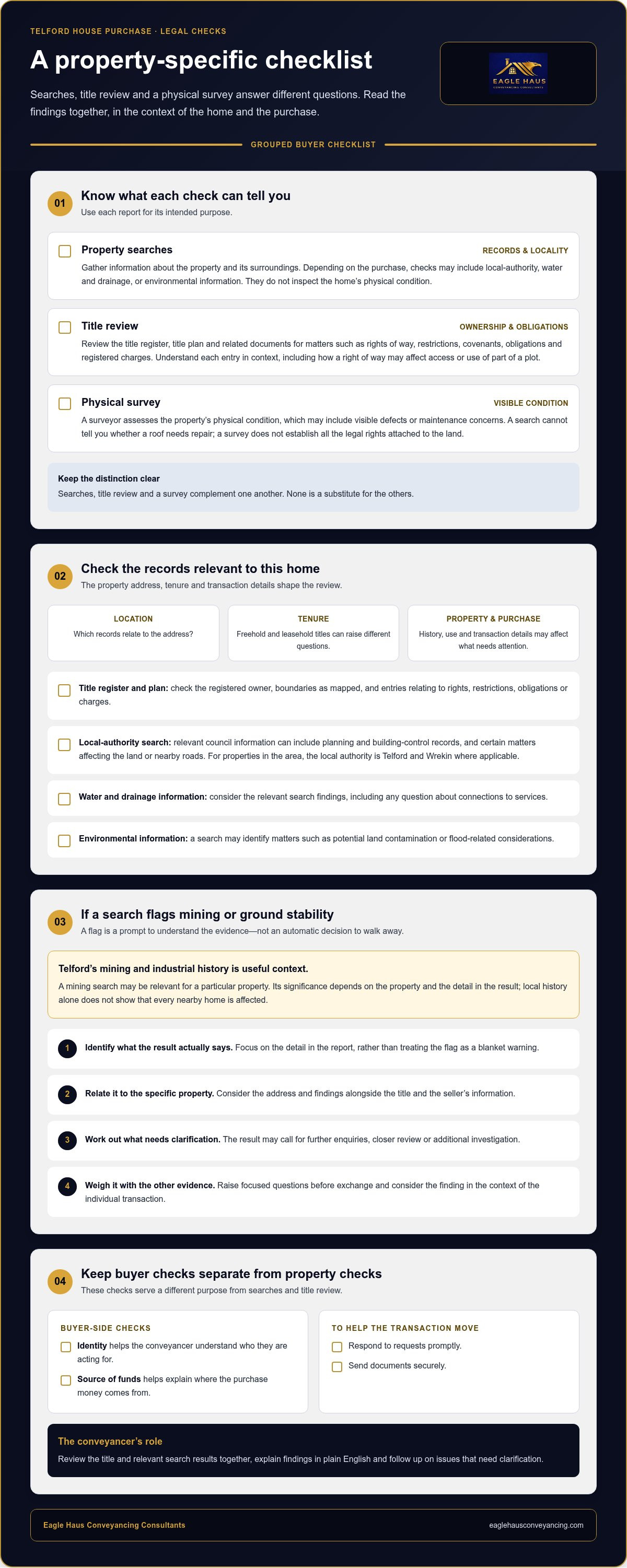
Several checks contribute to the legal review of a purchase, but each answers a different question. A physical survey looks at the building’s condition. Property searches gather information about the property and its surroundings, while legal due diligence brings those results together with the title and transaction documents. Knowing the distinction helps you understand what a report can establish, and what it cannot.
The legal checks for buying a house Telford buyers need depend on the individual home, its tenure and the details of the purchase. A search result is not, by itself, a decision about whether to proceed. It may point to something to clarify, investigate further or weigh against other information before making an informed decision.
Legal searches, title review and a survey: what is different?
Searches request information from relevant records about the property and its locality. Depending on the transaction, they may include local-authority, water and drainage or environmental information. A result could raise a question about a recorded restriction, a nearby issue or a connection to services. It reports information found in the search; it does not inspect the property’s physical state.
Title review focuses on legal ownership and the rights and obligations recorded against the property. The conveyancer considers documents such as the title register and plan, looking for matters like rights of way, restrictions, covenants and other relevant obligations. For example, a right of way may affect access or how part of a plot can be used. These entries need to be understood in context, not treated as a simple pass-or-fail list.
A survey is separate. A surveyor assesses the property’s physical condition, which may include visible defects or maintenance concerns. A search will not tell you whether a roof needs repair, and a survey will not establish all the legal rights attached to the land. Each check has a different purpose, so neither replaces the other.
Why a Telford purchase needs property-specific checks
Location can guide which questions deserve attention, but it cannot settle whether a particular home is affected. Telford’s history, geography and local governance provide useful background; the Telford Wikipedia page gives a general overview. For property searches, the local-authority area is Telford and Wrekin where applicable. The property address and search findings determine which records relate to the purchase.
Property history and tenure can also change the picture. A freehold house and a leasehold flat have different title documents and may raise different questions about rights, responsibilities or restrictions. A property’s past use or a search finding might prompt closer review, but it does not mean every nearby home has the same issue. The purchase details can also affect which documents need attention.
Legal checks should follow the individual property, not a postcode-wide assumption. If a result is flagged, identify what it says, how it relates to the title and whether further enquiries or investigation are appropriate. Local context can inform the review, but the decision should be based on evidence about the specific home.
Which conveyancing searches and title checks apply to a Telford house?
There is no single search package that suits every purchase. The legal checks for buying a house Telford buyers need are selected around the property’s location, tenure and transaction details. A conveyancer reviews the title and relevant search results together, explains what needs attention and considers whether further enquiries are appropriate.
These property checks are different from checks on you as a buyer. Identity and source-of-funds checks help the conveyancer understand who they are acting for and where the purchase money comes from. They do not provide information about the house, its title or its surroundings. Responding to requests promptly and sending documents securely can help keep the transaction moving.
What the title register and local-authority search can reveal
HM Land Registry title documents can show the registered owner, the property’s boundaries as mapped on the title plan, and entries relating to rights, restrictions, obligations or registered charges. A charge, for example, may relate to a mortgage and need to be addressed as part of the sale. The documents give a legal picture of the title, not a description of the home’s physical condition.
A local-authority search gathers relevant information held by the council. For a property in the Telford and Wrekin area, this can include planning and building-control records, as well as certain matters affecting the land or nearby roads. The search relates to the property address, and its findings should be read alongside the title and the seller’s information. The Law Society Conveyancing Protocol sets out a recognised framework for residential conveyancing work, including how information is gathered and considered during a transaction.
When environmental, drainage or mining searches matter
Further searches are selected in light of the location and what the initial information shows. An environmental search may identify matters such as potential land contamination or flood-related considerations. Given Telford’s industrial and mining history, a mining search may also be relevant for a particular property. Neither is a blanket warning about every home in the area.
Water and drainage information can help clarify how a property is connected to water and sewerage services. It may also identify recorded public infrastructure near or within the plot. If the result raises a question, the conveyancer can consider whether it calls for clarification or follow-up enquiries.
A search result is a prompt to assess the evidence, not proof of a defect or legal restriction. Its meaning depends on the wording, the property and any supporting information. A flagged entry may need explanation, but it does not automatically mean the home is unsuitable or that the purchase should stop.
For a property-specific review, Eagle Haus residential purchase conveyancing brings findings into the context of your transaction, with legal services provided through the regulated firm Taylor Rose.
Telford mining, ground stability and land history: how to read a flagged result
A mining or environmental flag can be unsettling, but it is a starting point for questions, not a verdict on a home. Read the result against the exact address, the search’s scope and the property’s history. For the legal checks for buying a house Telford buyers are arranging, the first step is to understand what the report actually says before drawing conclusions.
Place names can explain why a search deserves attention, but they cannot show whether a particular property is affected. The report and title information provide more useful evidence. If a finding is unclear, the conveyancer can explain its legal relevance and identify whether further enquiries or investigation may help.
Mining and ground-stability searches around Telford
Local property guidance has highlighted Rock, Dawley Bank and Hollinswood in connection with mining, and Randlay and Broseley as ground-stability examples. Treat these as prompts for address-specific checks, not as labels for every property in those areas. A street or neighbourhood name alone does not establish that a home has a stability issue, a defect or a legal liability.
Where a mining search is relevant, its report should identify the findings and the search coverage. The Coal Authority, now known as the Mining Remediation Authority, is a relevant source for mining information. The report’s terminology and scope matter: a reference to past or recorded activity needs to be interpreted in relation to the property, rather than taken as proof of damage.
If a result raises a specific concern, the next step may be to clarify the record or consider whether further assessment is appropriate. That decision should follow the evidence in the report and details of the property. Do not infer whether a property can be insured, or what cover may be available, from a place name or search flag alone.
Contaminated land and other environmental findings
Environmental searches can screen for matters such as potential contamination or flood-related information. A screening result indicates that a topic may need attention; it does not confirm that the land is contaminated or that flooding has affected the property. The address, historic land use and precise wording of the result all help determine its meaning.
Where a result refers to Environment Agency information, that record can help explain the specific environmental point being raised. It should not be read as a finding about every property nearby. Your conveyancer can relate the result to the property documents and raise focused enquiries where the information needs clarification.
To review a flagged result, identify the exact entry and which part of the property or search area it concerns. Then establish what evidence supports it and whether further investigation is warranted. If technical risks require dedicated follow-up, specialists such as Oxford Environmental Consultants (OEC) provide multi-disciplinary property compliance services across the UK. This keeps the decision grounded in the individual transaction. A flag may need no further action, or it may call for a closer look. The report, not the postcode, informs the next step.
A practical legal-check checklist for buying a house in Telford
A clear record of what has been requested, received and explained makes it easier to spot unanswered questions before exchange. Use this checklist to organise the legal work and give your conveyancer the information needed to review your purchase.
Before and during the searches
Complete the initial information requests. Provide requested identity and source-of-funds documents promptly, using the secure method provided. If money is coming from more than one source, explain this clearly and supply any supporting information requested.
Confirm the property details. Check that the address, agreed purchase details and any information you have about the tenure are accurate. Tell your conveyancer about anything that might affect the transaction, such as a planned change in ownership.
Understand the proposed checks. Ask which searches are being considered for this property and why. The right scope depends on the address, title and transaction details, so do not assume a standard package fits every Telford purchase.
Keep questions together. Note queries about the title, tenure and search scope in one place. Include the document or report name and the exact entry you are asking about, so you can get a focused explanation.
When search results or title issues need attention
Read the report with its source material. Review your conveyancer’s explanation alongside the relevant search result and property details. A short headline may not show the full context or the limits of the information gathered.
Ask what the finding means for this purchase. If an entry is unclear, ask whether it relates to the property itself, what its legal significance may be and whether further enquiries are recommended. Do not assume that a flag confirms a defect or restriction.
Track outstanding points before exchange. Keep a simple list of issues, replies received and anything still awaiting clarification. Raise unresolved questions with your conveyancer before deciding whether you are ready to proceed to exchange.
Keep legal and physical findings distinct. A survey may raise a concern about the building, while a search or title review may identify a recorded matter. Understand each on its own terms and in the context of the purchase. If an explanation is unclear, ask for it in plain English before making a decision.
For a Telford purchase, Eagle Haus can support your conveyancing, with legal services provided through its partnership with the regulated firm Taylor Rose.
How a conveyancer helps you complete legal checks for a Telford purchase
A conveyancer helps turn documents and search results into a clearer picture of the property you are buying. For legal checks for buying a house Telford, this means reviewing the title, arranging relevant searches and explaining findings in relation to the address, tenure and transaction. A result that looks concerning at first glance may need clarification, further enquiries or a closer look at supporting information before you can assess what it means.
Legal services are provided through the regulated firm Taylor Rose. Your conveyancer guides you through the legal process, explains what information is still needed and helps you understand the issues that need attention before you decide how to proceed.
From search results to clear advice
Searches and title documents provide different pieces of information. A conveyancer considers them together rather than interpreting a single entry in isolation. For example, if a search raises a question about a recorded matter, they can compare it with the title information and property details, then raise follow-up enquiries to clarify the point.
Outstanding questions can be reviewed as replies arrive. If an answer is incomplete or prompts another question, further clarification may be needed before you make a decision. Ask for the practical meaning of any finding in plain English: what it relates to, whether it affects the property’s legal position and what remains unresolved. This helps distinguish a confirmed fact from an assumption based on a report heading or local area.
Your next step as a Telford buyer
Before discussing a purchase, gather the property address, any details you have about its tenure and a short list of questions. If you have already received search or title information, note the document name and the specific point you want explained. Clear questions help focus the conversation on your transaction.
Legal checks help you understand the title and recorded information, but they do not replace a physical survey. Legal searches do not assess the building’s condition. Equally, a survey does not answer every question about ownership, rights or legal restrictions. Consider both sets of findings separately, then weigh them against your circumstances and appetite for risk before deciding whether to proceed.
Eagle Haus supports residential purchases in Telford and the wider regional area, including Staffordshire, Wolverhampton, Birmingham, Shropshire, Cannock and Walsall, with legal services provided through its partnership with Taylor Rose. You can discuss the legal checks for your purchase with the conveyancing team.
Move forward with clear questions
Turn any remaining uncertainty into a practical conversation. Gather the property details, note which findings still need explanation and decide what you need to understand before you are comfortable proceeding. The legal checks for buying a house Telford buyers complete support an informed decision, but they do not make it for you. Weigh the legal information alongside your priorities and any survey findings.
Eagle Haus supports residential purchases and sales across England and Wales, with legal services provided through its partnership with the regulated firm Taylor Rose. Discuss your Telford house purchase with Eagle Haus.
With the right questions answered and the process explained clearly, you can approach the next stage with greater confidence.
Frequently Asked Questions
What legal checks are carried out when buying a house in Telford?
The checks usually cover the seller’s legal right to transfer the property, the title and relevant searches. The exact scope depends on the purchase. For legal checks for buying a house Telford buyers can expect their conveyancer to explain which documents apply and whether anything needs follow-up. A leasehold purchase, for example, involves reviewing lease terms as well as the registered title, while a freehold purchase has different documents to consider.
Are mining searches needed for every house in Telford?
Not automatically. Whether a mining search is appropriate depends on the property’s location and the information available about its history. Do not assume a property is affected simply because it is in Telford, or unaffected because there is no visible sign of mining. The conveyancer can assess the address and transaction details, including any relevant lender requirements, and explain whether a mining search is needed.
Can a conveyancing search reveal ground-stability concerns?
Yes, a relevant search may flag recorded or potential ground-stability matters, including information connected with past mining. A search is based on available records and its stated coverage; it does not physically test the ground or confirm that a building has moved. If the result identifies a concern, establish what it relates to and whether further technical investigation is appropriate for that property.
What happens if a property search flags a potential problem?
Your conveyancer reviews the wording and context, then may seek clarification through enquiries or recommend further investigation if the evidence warrants it. For example, a record linked to former land use might need checking against the property’s exact location and history. Ask what is known, what remains uncertain and what the possible next steps are. A flag alone does not establish the effect on your purchase.
Is a property survey the same as conveyancing searches?
No. A survey is a separate inspection of the building’s condition, while searches provide recorded information about the property and its surroundings. A survey may identify signs of damp or roof damage, whereas a search may raise a question about land use or drainage records. If either report concerns you, share the relevant finding with your conveyancer so its legal implications can be considered separately from the building’s condition.
Do I need to complete identity and source-of-funds checks when buying a house?
Yes, expect your conveyancer to ask for identity documents and information explaining where the purchase funds come from. These checks relate to you and the money involved, not the property’s title or searches. If some funds are a gift or come from selling another asset, explain that clearly and provide the supporting documents requested. Send personal information only through the secure process provided by your conveyancing team.
Can I exchange contracts before all legal enquiries are resolved?
Exchange makes the contract legally binding, so unresolved enquiries can leave you committed without answers to questions you consider important. Whether an outstanding point must be resolved first depends on what it concerns and the advice given in your transaction. Ask your conveyancer to explain the risks and implications of any unanswered enquiry before authorising exchange. Take time to understand the position; do not assume it can be sorted afterwards.



Comments