Exchange and Completion in Shropshire: How Property Chains Work

In Shropshire, exchange of contracts makes a property purchase or sale legally binding, and the agreed completion date is written into the contract at that point. Buyers typically pay a deposit of 10% of the purchase price at exchange. Completion usually follows 7 to 28 days later, although the timing depends on the transaction and any connected chain.
It’s understandable to want a clear plan: exchange commits both parties to the transaction, while completion is when the money is transferred and the keys can be released. This guide explains what exchange means, when to agree a completion date, how conveyancers coordinate a chain and what happens on completion day. You’ll also see how the stages fit together and what needs to be in place before the transaction moves forward.
Table of Contents
What Does Exchange of Contracts Mean?
In England and Wales, exchange of contracts commits the buyer and seller to the agreed sale, purchase price and completion date. Their conveyancers exchange signed contracts, and the buyer pays the deposit. For buyers in Shropshire, this is when the exchange and completion process becomes legally binding.
Making the Sale Legally Binding
Exchange is when the buyer and seller become legally bound to complete the transaction under the contract. Before then, either party may withdraw without contractual consequences because the contract has not yet been exchanged. After exchange, both sides must proceed on the agreed terms. For Shropshire buyers, exchange is a significant legal milestone, not just an administrative step.
Deposits Required for Exchange
Buyers typically pay a deposit of 10% of the property’s total purchase price at exchange. The amount is calculated against the agreed price, so the conveyancer can explain the sum due for the specific purchase. Payment is commonly made by bank transfer to the conveyancer. If the buyer fails to complete after exchange, they may forfeit the deposit and face claims for compensation.
The completion date is agreed before exchange and written into the contract. The buyer’s conveyancer also needs authority from every buyer to exchange, which can be given by telephone or email. For a mortgage purchase, adequate buildings insurance must be in place from exchange. For a freehold home, arranging that cover is usually the buyer’s responsibility.
Shropshire does not change the legal effect of exchange, but searches and checks relate to the individual property. There is no single set of additional searches that applies to every Shropshire home. Local authority search results and other conveyancing enquiries may raise property-specific matters for the conveyancer to consider before exchange. The findings can prompt further enquiries or affect the buyer’s decision to proceed.
Before exchange, the buyer can still decide not to proceed without contractual consequences. After exchange, a buyer who does not complete may be in breach of contract, risking the deposit and a compensation claim. The seller is also committed, so exchange creates obligations for both parties.
New-build buyers may exchange before construction is complete. The purchase becomes legally binding and a deposit is paid, even though the home is not physically ready. The contract may include a long-stop date, setting an agreed timeframe for completion if building work takes longer than planned.
When Should Completion Dates Be Agreed?
The buyer and seller should agree a completion date before exchange so it can be included in the contract. The date needs to work for both parties and fit the practical arrangements for the move.
Agreeing the Completion Date
The buyer and seller agree the completion date through their conveyancers before exchange. This gives both sides a firm date to plan around, including the buyer’s mortgage arrangements and removal booking. A date that suits only one party can create avoidable pressure, particularly if a linked sale or purchase must also complete.
Choosing the Time Between Exchange and Completion
Buyers can propose how long to leave between exchange and completion in England, but the seller must agree too. The chosen interval depends on both parties’ plans and any connected transactions. A week or two is the most common timeframe, and allowing preferably 14 days gives more time to organise a move.
In a UK home purchase, exchange and completion usually take place 7 to 28 days apart. A shorter interval may suit a straightforward transaction, while a longer one can help with removal plans or coordinating a sale and purchase. The completion date is not simply selected by the buyer; it must be agreed between the parties before exchange.
For a Shropshire buyer moving from another property, the proposed date may need to align with the seller’s onward purchase. If one transaction in the sequence cannot proceed on the chosen day, the other dates may need to change too. Conveyancers discuss proposed dates with the parties in the chain before confirming a date for the contracts.
A mortgage also affects timing. Mortgage offers have expiry dates, so the planned completion date needs to fall within the offer period. The buyer’s conveyancer and mortgage broker can coordinate timing with the lender, reducing the risk of setting a date before funding arrangements are in place.
Removal arrangements are another practical factor. A buyer may need time to arrange packing and transport, while a seller needs to plan when to leave the property. Agreeing a date early gives both households a firm point for organising their plans, but the date is not final until it is written into the contract at exchange.
Same-day exchange and completion can happen in England and Wales, usually where there is no wider chain. There is little time between the transaction becoming binding and the move itself, so conveyancing and funding arrangements must already be ready. Where a chain exists, a gap allows each linked transaction to be coordinated around the agreed date.
Coordinating exchange in a property chain
A property chain links a buyer’s purchase to another sale, so transactions need to move in sequence. Conveyancers communicate across the chain to align exchange and completion dates, identify outstanding matters and confirm when each party is ready. One unresolved issue can affect connected buyers and sellers, even when their own paperwork is complete.
Before exchanging contracts, conveyancers establish whether linked transactions can proceed on compatible terms. They coordinate proposed dates and confirm that the necessary instructions and funds are in place for their clients. If a buyer is also selling, the sale proceeds may be needed for the purchase, making coordination between both transactions especially important.
On completion day, conveyancers coordinate the transfer of funds and confirm when completion has taken place. The seller’s conveyancer confirms receipt, then the seller or their representative can arrange for the estate agent to release the keys. Buyers and sellers should plan removals around the agreed date, bearing in mind that the exact completion time depends on when the funds reach the relevant account.
Between exchange and completion, the seller remains responsible for caring for the property and leaving it in the agreed condition. They should keep it secure and ready for handover, rather than treating the contract date as the end of their responsibilities. For example, the seller should plan to remove their belongings before the buyer takes possession.
A Property PX Group part-exchange offer is separate from an ordinary linked sale. Its written terms determine which property is being considered, what conditions apply and how the purchase fits with any other transaction. Buyers should account for those terms in the chain timetable rather than assume the arrangement follows the same sequence as a private sale.
Eligibility and locations for a part-exchange offer depend on its stated criteria and the property concerned. A buyer should make sure the written terms identify the property and any conditions affecting the proposed move. These details matter because an arrangement that changes or cannot proceed may also affect a linked purchase or sale.
A retention bond or retained sum should be understood through its written terms. The documents need to explain what property condition or work it relates to, who holds the money and what must happen before release. It is not a substitute for agreeing the handover condition, so consider any relevant wording as part of the conveyancing.
For buyers and sellers, the conveyancer coordinates legal completion, confirms the transfer of funds and communicates when keys can be released. The people involved still need to organise moving arrangements, access and the property handover around the agreed completion date.
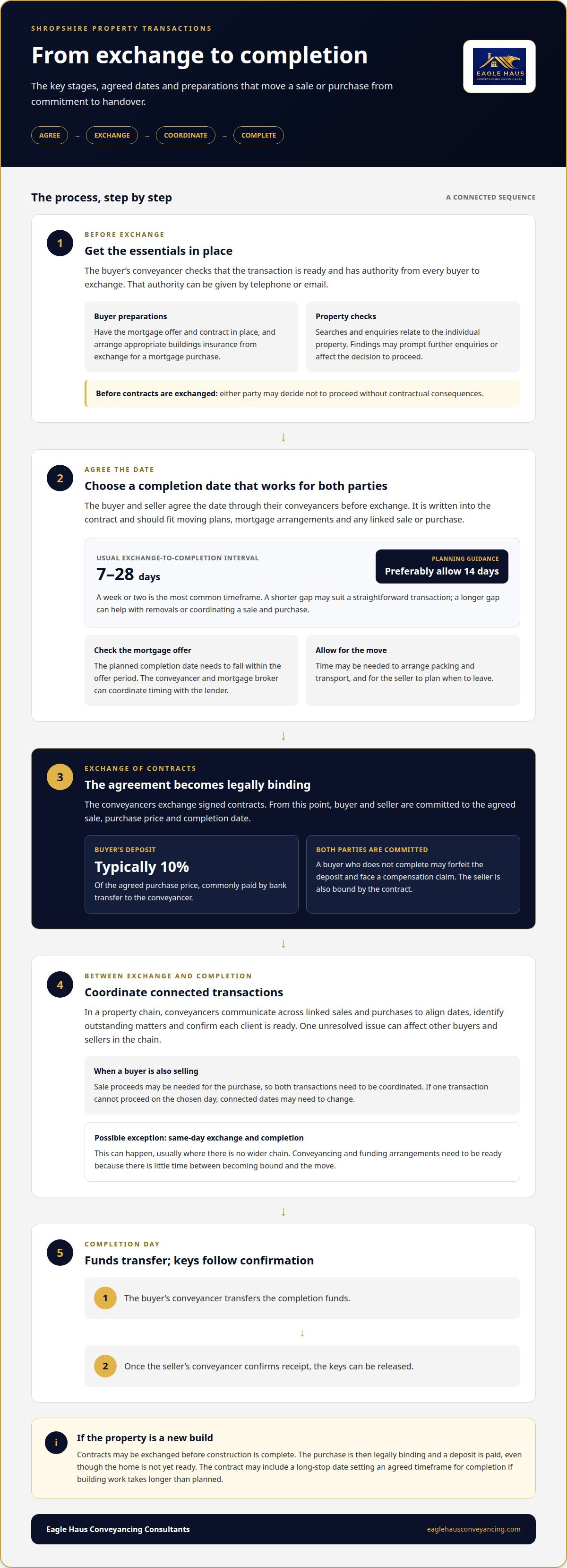
Completion day and transfer of funds
On completion day, the buyer’s solicitors transfer the purchase money to the seller’s solicitors. Completion takes place when the funds reach the seller’s conveyancer, who can then confirm receipt and arrange release of the keys.
Transferring Completion Funds
The buyer’s conveyancer sends the completion balance to the seller’s conveyancer, including any mortgage funds needed for the purchase. Once the money arrives, the seller’s conveyancer confirms completion to the buyer’s solicitors and estate agent. This confirmation authorises the key release and tells the buyer they can take possession. The transfer does not guarantee a particular time of day.
Mortgage funding needs advance planning. Lenders’ notice requirements are commonly stated as 5 working days or about 7 days, so the buyer’s conveyancer arranges the request ahead of completion. The timing of the request therefore matters.
Completion Timing and Bank Transfers
The exact time completion happens cannot be confirmed in advance. It depends on the banking system and, in a chain, whether funds from a related sale have arrived. Completion money may reach the seller’s conveyancer later in the day. Buyers should plan moving arrangements around the agreed date, not assume keys will be ready first thing.
For example, a Shropshire buyer relying on sale proceeds may need the linked sale to complete before the purchase funds can be sent. Conveyancers monitor the transactions and communicate as funds move between accounts. A delay at one stage can affect later transfers, so removal plans should allow for key release to follow confirmation rather than a fixed morning appointment.
What Happens on Completion Day
Once the seller’s conveyancer receives the purchase money, they confirm completion to the buyer’s solicitors and estate agent. The estate agent can then release the keys, allowing the buyer to enter the property. For a Shropshire purchase, this is the practical handover point: the transaction completes, the seller leaves and the buyer can begin moving in.
The seller should leave the property in the agreed condition and move out before the buyer takes possession. The buyer’s conveyancer does not control the precise key collection time, as release follows confirmation of cleared funds. Keeping in touch with the conveyancers and estate agent helps both households respond as the transaction progresses.
Time from Exchange to Completion
For a UK home purchase, exchange and completion usually take place 7 to 28 days apart. The gap allows time to arrange mortgage funds, removal services and the practical handover. In a chain, conveyancers also need to coordinate connected sales and purchases, so the agreed interval must work across the transactions.
Residential conveyancing in Shropshire typically takes between eight and sixteen weeks overall, depending on complexity and chain length. This is the wider transaction timeframe, not the gap between exchange and completion. Delays in preparing for exchange can push back the eventual completion date, while same-day exchange and completion can happen when there is no wider chain.
Steps in the exchange and completion process
In Shropshire, a property transaction moves through preparation, exchange and completion. Each stage depends on information, decisions and funds being ready at the right time. Understanding the exchange and completion process in Shropshire can help buyers and sellers see what their conveyancer is progressing and why delays before exchange can affect the move date.
Prepare the contract and property information. The buyer’s conveyancer reviews the contract, mortgage offer, search results and survey information. The seller completes the forms needed for the sale, including the property information form, TA6. The conveyancer considers the documents and raises enquiries where details need clarification. For a Shropshire property, the search results and replies relate to that particular home, rather than a universal checklist for the county.
Resolve outstanding points. Before exchange, conveyancers work through enquiries and establish whether the parties can proceed on the proposed terms. The buyer’s conveyancer needs specific authority from every buyer to exchange. Each buyer can give that authority by telephone or in writing by email. This stage gives the buyer an opportunity to make decisions on the information gathered before becoming contractually committed.
Agree the date and exchange contracts. The buyer and seller agree a completion date before exchange, and it is inserted into the contract. Their conveyancers then exchange the signed contracts, and the buyer pays the deposit. Exchange makes the transaction legally binding. For a mortgage purchase, adequate buildings insurance must be in place from exchange, with arrangements depending on whether the property is freehold or leasehold.
Prepare for completion. Exchange and completion usually take place 7 to 28 days apart. The buyer’s conveyancer arranges the mortgage funds, while the buyer and seller organise their moving arrangements. Most mortgage lenders require 5 working days’ notice to arrange payment of funds. A longer interval may help conveyancers coordinate a chain, but the date needs to suit all linked parties.
Complete and arrange key release. On the agreed date, the buyer’s conveyancer transfers the completion money to the seller’s conveyancer. The seller’s conveyancer confirms receipt and notifies the relevant parties, including the estate agent, that the keys can be released. The buyer can then take possession. The exact time depends on the banking system and any funds arriving from a related sale.
In the exchange and completion process in Shropshire, preparation affects when a transaction can move forward. Delays in resolving enquiries or arranging funds can postpone exchange or completion, so conveyancers keep the legal and financial steps aligned. Same-day exchange and completion can happen in England and Wales, usually where there is no wider chain.
Discuss your conveyancing transaction to get professional support with the stages from contract preparation through completion.
Eagle Haus Conveyancing Consultants
Eagle Haus Conveyancing Consultants supports residential purchases and sales across England and Wales, including Shropshire. If you’re planning a move in Shropshire, Eagle Haus can guide you through the stages leading to exchange and completion, including the contract, agreed dates and communication around a property chain.
Turn to Eagle Haus when you’re preparing to buy or sell, or need guidance on how a transaction progresses from preparation to completion. Its conveyancing services also include transfers of equity, remortgages on the majority of lenders’ panels, and company purchases, where the legal steps differ from a standard home move.
For support with your property transaction, contact Eagle Haus Conveyancing Consultants.
Move forward with a clear plan
Your next step is to bring the details of your move together: whether you’re buying, selling or managing both sides of a chain, and what needs to happen before you can proceed. A conveyancer can explain how the legal work fits your circumstances, identify the decisions that need attention and keep communication focused as the transaction progresses.
Understanding the exchange and completion process in Shropshire can help you approach your move with clearer expectations. If your plans involve a change in ownership or borrowing rather than a standard purchase or sale, Eagle Haus also provides conveyancing support for the relevant legal steps.
Contact Eagle Haus Conveyancing Consultants to discuss your property transaction and the support you need. With a clear view of the next steps, you can move ahead feeling more prepared.
Frequently Asked Questions
What happens during exchange and completion when buying or selling a property?
Exchange commits the buyer and seller to the contract, while completion carries out the agreed transaction. The buyer’s conveyancer sends the completion funds, and the seller’s conveyancer confirms receipt before the keys are released. For a seller buying another home, the sale and purchase may be linked, so completion funds and moving arrangements need to align across both properties.
Can completion take place over the weekend?
Weekend completion is not the usual arrangement, because completion depends on conveyancers transferring funds and confirming receipt before keys are released. Banking transfers and any mortgage funds also need to be in place. For a Shropshire move, plan around a date when conveyancers and the estate agent can coordinate payment and handover, rather than relying on weekend access.
Can a buyer pull out between exchange and completion?
A buyer cannot simply withdraw after exchange without consequences, because the contract commits both parties to complete. If the buyer fails to complete, they may be in breach of contract, risk losing the deposit and face a claim for compensation. A buyer facing difficulty should tell their conveyancer promptly so the contractual position and any available options can be addressed.
Do you need to sign the sale contract?
Yes, the buyer and seller sign their respective contracts before their conveyancers exchange them. Signing alone does not make the sale binding: the legal commitment takes effect at exchange. Your conveyancer explains the contract terms and obtains your authority to proceed. This distinction matters if you have signed but exchange has not taken place, as the transaction is not yet binding between buyer and seller.
What does my solicitor do on completion day?
Your conveyancer arranges the transfer of the purchase money, including any mortgage funds due for the transaction, and liaises with the other side’s conveyancer. Once the seller’s conveyancer confirms receipt, your conveyancer can confirm completion and the estate agent can release the keys. If you are selling, your conveyancer also receives the sale proceeds and deals with them in line with your instructions.
What does exchange of contracts mean when buying a property in Shropshire?
For a Shropshire buyer, exchange means the parties’ conveyancers have formally exchanged the signed contracts, committing buyer and seller to the agreed terms. Exchange is also the point to act on arrangements linked to the contract, including buildings insurance for a freehold purchase. This is different from having an offer accepted, which does not itself create the same contractual commitment.
What are the steps from offer acceptance to exchange and completion in England?
After an offer is accepted, the buyer and seller instruct conveyancers, who progress the contract, searches, enquiries and mortgage arrangements. The buyer reviews available property information and survey results, while the seller supplies the sale forms. Once outstanding points are resolved, both sides agree the completion date and authorise exchange. The conveyancers then arrange completion funds, followed by confirmation and key release.
What are the legal consequences of pulling out after exchanging contracts?
Withdrawing after exchange can amount to a breach of contract because the buyer and seller are legally committed to complete. A buyer who fails to complete may forfeit the deposit and face a claim for compensation. The seller is also bound by the contract and cannot treat the agreed sale as cancelled without addressing the legal consequences. Contact your conveyancer immediately if completion is at risk.



Comments