Do I Need a Solicitor to Remortgage? Your 2026 UK Legal Guide

Could you be paying hundreds of pounds more in interest every month just because you're waiting for a legal process you might not even need? With around 1.8 million UK homeowners expected to remortgage in 2026, the pressure to secure a new fixed rate before falling onto an expensive 7.35% Standard Variable Rate is intense. You're likely asking yourself, do i need a solicitor to remortgage, or can you simply handle the paperwork yourself to save on costs? It's a common concern, especially when you're trying to balance the need for speed with the desire to keep your property title secure.
We understand that the legal side of property finance can feel like a maze of hidden costs and confusing terminology. This guide will help you discover exactly when legal representation is mandatory for your remortgage and how to choose the most efficient path for your property. We'll clarify the vital differences between a simple rate switch and a full remortgage, providing a clear roadmap to a smooth transition and a lower interest rate.
Table of Contents
Understanding the Remortgaging Process: When is a Solicitor Required?
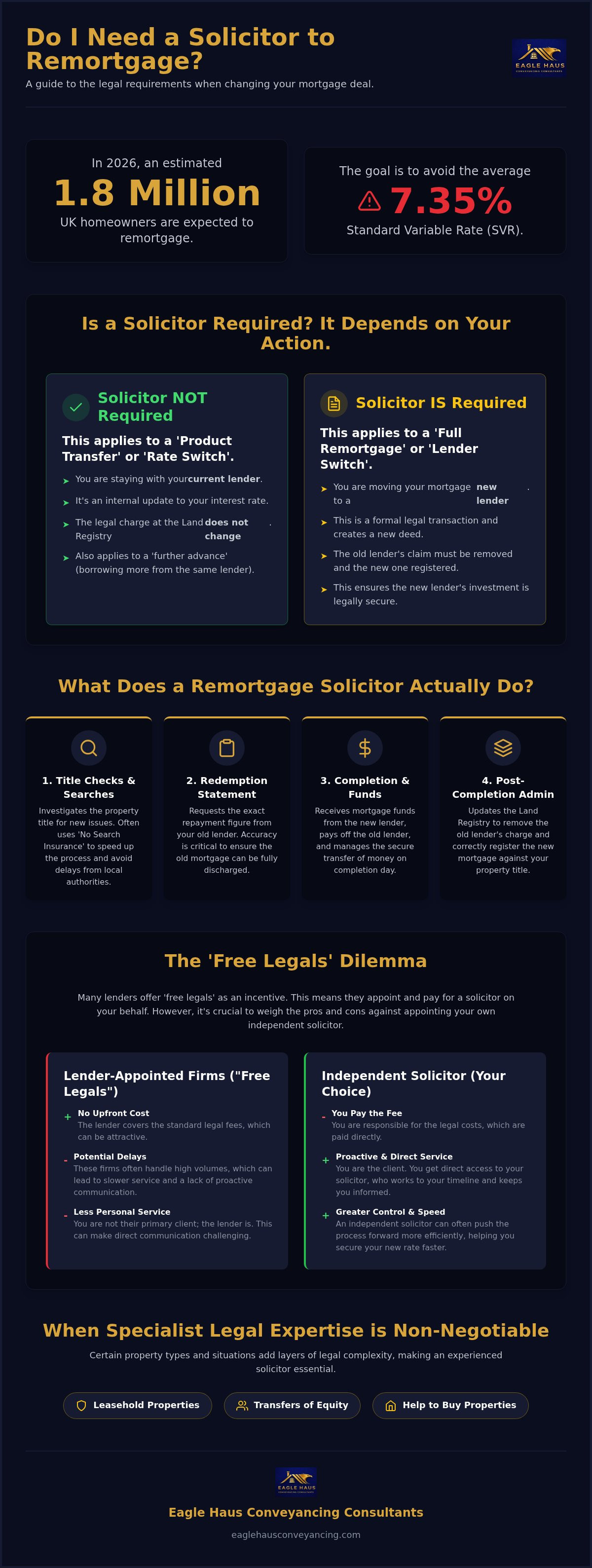
To understand what a remortgage is, you have to look at it as a formal debt transfer. You're effectively paying off one lender (Lender A) with funds from another (Lender B). Because this involves a new legal entity taking a stake in your home, the legal paperwork must be updated to reflect the change in ownership of the debt. With the Bank of England Base Rate currently at 3.75% as of August 2026, many of the 1.8 million homeowners looking to switch deals are prioritising speed to avoid the 7.35% average Standard Variable Rate. Efficiency is key, but so is legal accuracy.
The answer to do i need a solicitor to remortgage depends entirely on whether the lender named on your mortgage deed is changing. If you're staying with your current provider, the process is significantly simpler and often completely administrative.
Remortgage vs. Product Transfer: The Legal Distinction
A product transfer is often called a "rate switch". Since you aren't changing lenders, the legal charge registered at the Land Registry remains the same. It's an internal update to your interest rate, meaning you don't need a solicitor. Similarly, if you take a "further advance", which involves borrowing more money from your existing lender, they usually bypass the need for external legal work. However, the moment you move your debt to a new bank, it becomes a formal legal transaction. You're essentially creating a new deed. This requires professional oversight to ensure the old lender's claim is removed and the new one is correctly registered against your property title.
Why Lenders Insist on Legal Representation
When you switch providers, your new lender needs absolute certainty that their investment is safe. They require a "Certificate of Title" from a qualified solicitor. This document confirms the property is "good and marketable" and that there are no hidden legal defects that could devalue their security or prevent them from recovering their funds if needed.
Solicitors also play a critical role in security and fraud prevention. They must verify your identity and ensure the new mortgage ranks as the "first legal charge" at the Land Registry. This means if the property were sold, the lender is the first to be repaid. If you're wondering do i need a solicitor to remortgage for a simple switch, remember that the solicitor acts for both you and the bank. They ensure the old mortgage is fully discharged and that the Land Registry records are updated accurately, protecting your ownership rights whilst satisfying the bank's requirements.
What Does a Remortgage Solicitor Actually Do?
While many homeowners initially ask do i need a solicitor to remortgage to save on costs, the legal work behind the scenes is what ensures your home remains your most secure asset. A remortgage solicitor doesn't just "check the deeds". They act as the bridge between your past financial commitment and your future one, managing the friction between two different lenders. Their primary goal is to ensure that the new lender's money arrives safely and that the old lender's claim on your home is legally erased.
Title Checks and Property Searches
A significant part of the process involves a thorough investigation of your property title. The solicitor ensures no new "burdens" or restrictive covenants have appeared since you first bought the home. In the West Midlands, search requirements can vary significantly between local authorities in Birmingham, Wolverhampton, and Walsall. Some lenders might insist on full local authority searches, which can take several weeks to return. To maintain momentum and avoid falling onto a lender's Standard Variable Rate, we often use "No Search Insurance". This is a specialised policy that protects the lender against issues a traditional search might have revealed, allowing the process to proceed without the usual wait times. This level of detail is even more vital when remortgaging a Help to Buy property, where the legal layers are more complex and require precise coordination with the scheme administrator.
The Redemption and Completion Phase
The solicitor's most critical role occurs during the completion phase. They must request a "redemption statement" from your current lender. This document shows exactly how much you owe on the day of completion, including any final interest and early repayment charges. Accuracy here is non-negotiable. If this figure is even slightly incorrect, the old mortgage cannot be discharged, and the whole process can stall. Your solicitor also reviews your new mortgage offer in detail, explaining the legal implications and any specific conditions the new bank has set.
On the day of completion, the solicitor manages the transfer of funds. They receive the money from your new lender, pay off your old mortgage in full, and settle any professional fees. They then draft a final financial statement for you, ensuring you see exactly where every penny has gone. Finally, they handle the administrative task of registering the new lender at HM Land Registry. If you want a team that prioritises this level of clarity and speed, you can explore our specialist remortgage services to see how we can help you secure your new rate efficiently.
The 'Free Legals' Dilemma: Independent Solicitors vs. Lender-Appointed Firms
When you're browsing the latest mortgage deals in 2026, you'll likely see "free legals" positioned as a major benefit. It sounds like an effortless way to save on upfront costs whilst securing a better interest rate. However, it's vital to understand that "free" usually means the lender appoints a high-volume factory firm to handle the paperwork on their behalf. While this might seem convenient, the question do i need a solicitor to remortgage often shifts from a matter of legal requirement to a matter of service quality. In a high-volume environment, your case is one of thousands, and the personal touch often disappears amongst the automated emails.
The trade-off is simple: you save on initial legal fees, but you may pay the price in significant delays and poor communication. For many homeowners, having a dedicated partner who understands the remortgage process inside out is worth the investment. Independent solicitors typically complete the legal work weeks faster than lender-appointed firms because they operate on a boutique, client-focused model rather than a mass-production one. This speed is essential when you're trying to lock in a rate before market conditions change.
The Hidden Costs of 'Free' Services
Volume firms often struggle with "black hole" communication. You might find it impossible to speak to the same person twice, or your emails could go unanswered for days at a critical juncture. This isn't just frustrating; it's financially risky. If your current deal expires and the legal work hasn't finished, you'll automatically fall onto your lender's Standard Variable Rate (SVR). With the average SVR currently around 7.35%, even a few weeks of delay can cost you more in interest than the price of hiring your own solicitor. Choosing your own residential purchases and sales expert ensures that your completion date is a priority, not just another number in a queue.
The Value of Independent Legal Advice
An independent solicitor has a primary duty to protect your interests, not just the bank's. This distinction matters when things get complicated. You get direct access to a conveyancer who understands the local landscape in Staffordshire or Wolverhampton. They can provide tailored advice if your property has a unique structure or if your financial situation requires a more nuanced approach. By prioritising personal connection over transaction volume, an independent firm ensures your property title remains secure whilst keeping the momentum of your move steady and reassuring. When you ask do i need a solicitor to remortgage, consider whether you want a distant service provider or a proactive partner in your corner.
Complex Scenarios: When Legal Expertise is Non-Negotiable
While many homeowners start with a straightforward goal, specific property details or life changes can add layers of legal complexity. In these cases, the question of do i need a solicitor to remortgage is quickly answered by the strict requirements of your new lender. They'll insist on professional oversight to ensure their security is protected against unique risks. Whether you're navigating the nuances of a leasehold or adjusting who actually owns the home, expert guidance prevents small administrative hurdles from becoming expensive delays.
Transfer of Equity During a Remortgage
Life transitions often coincide with financial ones. If you're adding a partner to the deeds or removing an ex-spouse, you're performing a Transfer of Equity. This is a separate legal deed that must be executed alongside the remortgage. It's also where Stamp Duty Land Tax (SDLT) implications often surface. Even if no money is changing hands, the "consideration" for tax purposes includes the value of the mortgage debt being taken on by the person staying or joining. Most "free legal" packages provided by lenders explicitly exclude this work. You'll need to appoint your own professional to handle the transfer and ensure the Land Registry records are updated correctly.
Leasehold Remortgages: The Extra Steps
Leasehold properties, which are common across Birmingham and the wider West Midlands, demand extra diligence. Your solicitor must check that the remaining lease term meets the new lender's minimum requirements, which often sit between 70 and 85 years in 2026. They also need to obtain "Landlord's Consent" and serve a formal "Notice of Charge" to the freeholder or management company once the new mortgage is in place. Managing the "apportionment" of ground rent and service charges is another vital step. This ensures you aren't paying for the previous lender's period of cover and that all financial obligations to the management company are up to date.
For property investors, the stakes are even higher. Professional landlords often require a specialist buy to let remortgage solicitor to navigate the nuances of limited company borrowing or portfolio management. Whether you're using a remortgage to fund home improvements or to consolidate debt, having an expert who can explain the legal implications is essential for your long-term security. If your situation involves any of these complexities, you can get a tailored remortgage quote from our expert team today to ensure every detail is handled with precision.
Preparing for Your Remortgage: Next Steps and Choosing Your Partner
As you approach the final stages of your financial switch, taking a proactive stance is the best way to avoid the stress of a looming deadline. With 1.8 million UK homeowners expected to remortgage in 2026, the demand for legal services is high. When you ask do i need a solicitor to remortgage, the answer isn't just about the legal requirement; it's about how quickly you can move from an expensive 7.35% Standard Variable Rate to your new deal. To ensure a smooth transition, follow these four practical steps:
Step 1: Confirm that your chosen solicitor is on your new lender's approved panel.
Step 2: Gather your current mortgage statement and valid ID documents before you even receive your formal offer.
Step 3: Compare the value of the lender's "free legal" service against their "cashback" option, which allows you to hire your own independent representative.
Step 4: Instruct a solicitor who understands the specific property nuances in Birmingham, Telford, or the wider West Midlands.
The Importance of Lender Panels
A solicitor cannot act for a bank unless they are a member of that bank's "panel". This is a pre-approved list of firms that the lender trusts to protect their investment. If you instruct a firm that isn't on the panel, they'll have to outsource the lender's portion of the legal work to another firm. This adds layers of bureaucracy, doubles the communication points, and frequently causes significant delays. Eagle Haus, providing services through Taylor Rose, maintains extensive panel memberships with the UK's major lenders. This direct relationship ensures that we can act for both you and the bank simultaneously, keeping the process lean and efficient. Choosing a firm with these existing credentials is a vital part of answering do i need a solicitor to remortgage with confidence.
How to Ensure a Fast Completion
Modern remortgaging relies on speed and digital transparency. We use advanced onboarding tools that allow you to verify your identity and sign key documents from your smartphone, removing the need for traditional post. Setting a target completion date at least four weeks before your current fixed rate expires is a smart strategy to avoid any overlap with higher interest rates. Local expertise in areas like Cannock or Walsall also plays a role. A solicitor familiar with local authority quirks can resolve title issues or search requirements faster than a distant volume firm. By combining tech-savvy methodology with a boutique level of personal attention, you can secure your property's future whilst enjoying a steady, reassuring journey to completion.
Secure Your Property’s Future Today
Deciding how to proceed with your property finance is about more than just finding the lowest interest rate. It’s about ensuring your home’s legal title is handled with precision and care. While a simple rate switch with your current lender stays administrative, the moment you move to a new provider, the question of do i need a solicitor to remortgage becomes central to your security. By choosing a proactive partner instead of a volume factory, you protect yourself from the delays that lead to expensive standard variable rates.
At Eagle Haus, we combine deep expertise in West Midlands property law with a modern, digital-first approach to speed up your completion. We’re regulated by the SRA through Taylor Rose, giving you the peace of mind that your transaction is in safe hands. Don’t leave your mortgage transition to chance or settle for unresponsive service at a critical time. Get a transparent remortgage conveyancing quote from Eagle Haus today and take the first step towards a smoother, more secure financial future. We’re here to guide you every step of the way.
Frequently Asked Questions
Do I need a solicitor to remortgage with the same lender?
You don't need a solicitor if you're staying with your current lender for a simple product transfer. This is often called a rate switch and is treated as an administrative update rather than a new legal transaction. However, if you want to borrow additional funds for home improvements or change the names on the property title, your lender will usually require legal oversight to update the mortgage deed.
How much are solicitor fees for a remortgage in 2026?
Fees for remortgaging vary based on the complexity of your property title and whether you're including a transfer of equity. Many lenders offer "free legal" packages where they cover the cost of their chosen firm, but these often come with slower service. If you choose your own solicitor, you'll pay a professional fee in exchange for a dedicated point of contact and a faster completion to avoid expensive variable rates.
Can I do the conveyancing myself when remortgaging?
You can't handle the conveyancing yourself because lenders require a qualified professional to provide a Certificate of Title. This document is a legal guarantee to the bank that their investment is secure and the property title is sound. Banks won't release funds to an individual; they only transfer money to a regulated solicitor who is on their approved panel to ensure the old mortgage is properly discharged.
How long does the legal side of remortgaging take?
The legal process typically takes between four and eight weeks from the moment your solicitor receives your formal mortgage offer. The exact timeline depends on how quickly your current lender provides a redemption statement and the complexity of your property's title. Using modern digital onboarding tools can significantly reduce this timeframe, helping you secure your new interest rate well before your current fixed deal expires.
What is a 'Certificate of Title' in a remortgage?
A Certificate of Title is a formal document sent by your solicitor to your new lender shortly before completion. It confirms that the property title is "good and marketable" and that there are no legal defects that would prevent the bank from enforcing their security. It's the final green light the lender needs before they agree to release the funds required to pay off your old mortgage debt.
Do I need new searches when I remortgage?
Whether you need new searches depends entirely on your new lender's specific criteria. While some banks insist on full local authority searches, many in 2026 accept "No Search Insurance" instead. This policy is often cheaper and much faster, protecting the lender against any issues a traditional search might have uncovered. Your solicitor will advise which option fits your lender's requirements whilst keeping your move on track.
What happens if I remortgage without a solicitor?
If you attempt to switch lenders without a solicitor, the transaction simply won't proceed. You're effectively asking do i need a solicitor to remortgage when moving your debt to a new bank, and the answer is always yes. Without a professional to discharge the old mortgage and register the new one, the Land Registry records would remain incorrect, and your new lender would refuse to release the funds.
Why is my remortgage taking so long with the lender's firm?
Delays with lender-appointed firms usually happen because these businesses operate on a high-volume, low-cost model. Your case is handled as part of a massive queue, often leading to slow communication and automated updates. If your completion is dragging, it might be because the firm is prioritising thousands of other cases simultaneously. Choosing an independent solicitor ensures your remortgage gets the individual attention needed for a swift resolution.



Comments