Completion day in Wolverhampton: what buyers and sellers do

Completion day is when the purchase money is transferred and ownership changes hands, not simply the day you collect the keys. If you’re wondering what happens on completion day in Wolverhampton, the buyer’s solicitor sends the funds to the seller’s solicitor. Once receipt is confirmed, the estate agent can release the keys. There’s no guaranteed completion time: it depends on when the funds arrive and whether the property is part of a chain.
It’s understandable to want a clear plan for a day involving a move, handovers and updates. Exchange and completion are separate stages: exchange makes the agreement legally binding, while completion finalises the sale.
This guide explains what buyers and sellers need to do, how the money and keys are handled, and why a chain can affect timing. It also covers what to expect after moving in and how completion differs from exchange, so you can prepare for each step.
Table of Contents
What happens on completion day?
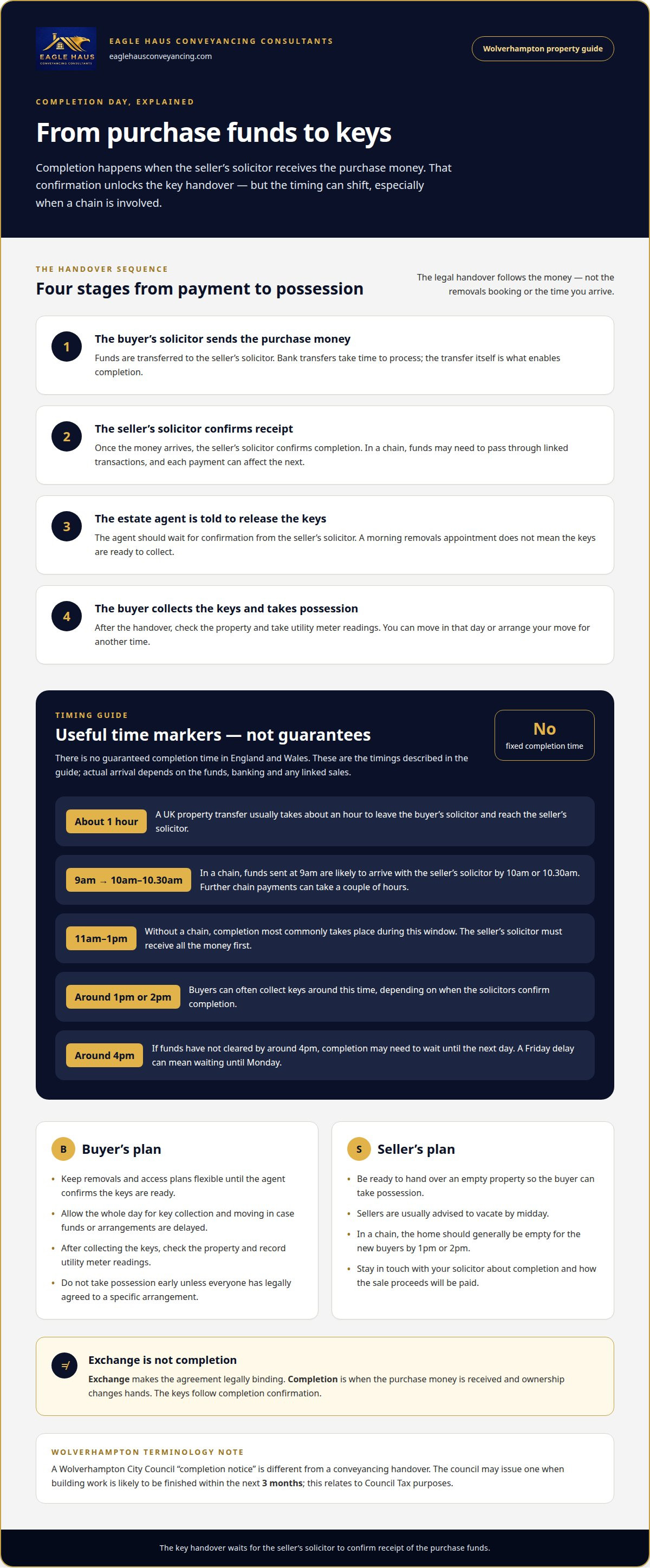
The buyer’s solicitor sends the purchase money to the seller’s solicitor, who confirms receipt. The estate agent can then release the keys, allowing the buyer to take possession.
Collecting keys and moving in
Collecting the keys is the handover that lets the buyer enter and take possession after completion. Buyers can often collect keys around 1pm or 2pm, although the timing depends on when the solicitors confirm completion. You don’t have to move in that day. Allowing the whole day for key collection and moving gives you room to respond if funds or arrangements are delayed.
When agents release the keys
The estate agent should wait for the seller’s solicitor to confirm completion before releasing the keys. Confirmation follows receipt of the purchase money, which can take time to move between solicitors, especially when a chain is involved. A morning appointment with the removals team doesn’t mean you can collect the keys then. Keep your moving plans flexible until the agent receives the go-ahead.
Moving into a property before legal completion carries risks. Don’t take possession early unless everyone has legally agreed to a specific arrangement. Until completion, the agreed transfer of money and ownership hasn’t taken place, so early entry can create uncertainty about who is entitled to occupy the property.
There’s no guaranteed completion time in England and Wales. Timing can depend on the bank, the solicitors and the number of linked sales. In a chain, money may need to pass through several transactions before the final seller receives it. Mortgage funds and other payments must reach the seller’s solicitor before completion can be confirmed.
For sellers, moving out in good time helps the buyer collect the keys without avoidable delays. Sellers are usually advised to vacate by midday; in a chain, the home should generally be empty for the new buyers by 1 or 2pm. The timing can vary with the number of buyers and sellers involved.
After collecting the keys, buyers can enter, check the property and take utility meter readings. Recording the readings establishes a starting point for usage and can help prevent later disputes about bills. You can move in that day or arrange your move for another time.
Wolverhampton has a separate use of the term “completion notice”. According to Wolverhampton City Council, the council may issue one when building work is likely to be finished within the next 3 months. This relates to a property’s completion for Council Tax purposes, not the conveyancing handover between a buyer and seller.
If a chain or banking delay holds up the funds, the key handover must wait for confirmation. Keep your removals plans and access arrangements aligned with the agreed completion date, and leave time to move after the estate agent releases the keys.
What is "completion" in buying or selling a property?
Completion is when the buyer’s solicitor transfers the purchase money and the seller’s solicitor receives it. Receipt marks the sale as complete and ownership changes hands.
Transfer of purchase funds
The transfer is the movement of the buyer’s purchase funds from their solicitor to the seller’s solicitor. The seller’s solicitor must receive the money before the sale can be confirmed. In a chain, funds may first need to pass through linked transactions. Each solicitor then uses money received for the next transaction, so one delayed payment can affect the timing of others.
The purchase funds include the amount due to the seller under the transaction. If the seller has an outstanding mortgage, their solicitor requests a redemption certificate calculated to the completion date. After receiving the buyer’s money, the seller’s solicitor normally repays that mortgage and settles relevant costs before sending the remaining balance to the seller. The seller therefore receives the net proceeds after those amounts are dealt with.
Completion confirmation and timing
Completion confirmation is the seller’s solicitor’s notice that the purchase funds have arrived. The transfer, rather than a valuation or moving appointment, is what completes the sale. The buyer’s solicitor can then pass on confirmation, and the estate agent can release the keys. Until the funds arrive, the legal handover is not complete.
Bank transfers take time to process. In a UK property sale, the money usually takes about an hour to leave the buyer’s solicitor’s account and reach the seller’s solicitor. In a chain, the first funds sent at 9am are likely to arrive with the seller’s solicitor by 10am or 10.30am. Further payments can take a couple of hours to move through the chain.
There is no guaranteed completion time in England and Wales. Without a chain, completion most commonly takes place between 11 am and 1 pm. The actual timing depends on when the seller’s solicitor receives all the money, and banking-system problems can delay transfers. If funds have not cleared by around 4pm, completion may need to wait until the next day. A Friday delay can mean waiting until Monday.
The conveyancing solicitors coordinate these payments and confirm when their part of the transfer is complete. Buyers and sellers can use that update to plan the next stage, including key collection or the seller’s onward move. For a residential purchase or sale, conveyancing support for property transactions can help keep the legal and payment steps organised.
Completion day for sellers
A seller’s main tasks are to leave the property ready for handover, stay in touch with their solicitor and understand how the sale proceeds will be paid. Planning the move around the agreed date helps the buyer take possession without avoidable delays.
Moving out on completion day
Sellers are usually advised to vacate by midday on completion day, so the buyer can take possession once the sale completes. In a chain, the home should generally be empty for the incoming buyer by 1 or 2pm, although timings can vary with the number of linked buyers and sellers. This makes removal arrangements and access plans important parts of the day.
Allow enough time to remove belongings and make the property available for handover. If the seller hasn’t vacated on time, completion can be delayed, affecting the buyer’s move and other transactions in the chain. If a delay means the transaction cannot complete, the party responsible may be liable for the other party’s costs over the weekend.
The seller’s completion-day checklist
A seller’s checklist helps plan how to clear the property, handle outstanding costs and stay in contact with their solicitor. Missing paperwork or an unpaid invoice can complicate the final arrangements. Complete necessary paperwork in advance, keep your solicitor updated and organise the move around the agreed completion date.
Arrange removals so the property can be vacated in time for the buyer’s handover.
Settle outstanding invoices, including estate agent fees and unpaid conveyancing costs, which are due on completion.
Keep your solicitor informed about moving arrangements and any change that could affect the handover.
These practical steps support a clear handover. If the seller is also buying another property, the onward move may depend on the linked transaction completing and funds moving through the chain. Keep arrangements for both moves aligned with updates from the solicitors.
Receiving the seller’s proceeds
The seller’s proceeds are the balance left after the solicitor receives the purchase money and pays amounts due from the sale. The amount reaching the seller can therefore differ from the full purchase price. If there’s an outstanding mortgage, the seller’s solicitor normally uses the funds to repay it and settle relevant costs before sending the remaining balance to the seller.
If the seller is buying another home, the proceeds may help fund that purchase. In a chain, timing depends on the money reaching each solicitor and being passed along. Ask your solicitor for an update on receipt and onward payment, particularly if the funds are needed for another transaction that day.
A move can involve several linked steps, from clearing the home to settling invoices and arranging the next purchase. Keeping your solicitor informed and your moving plan realistic helps coordinate each part with the agreed completion arrangements.
Buyer's completion-day checklist
For buyers, completion day combines final solicitor checks, confirmation of the transaction and practical moving arrangements. Planning removals around the agreed date helps keep each step organised, even if the exact timing changes.
Before completion is confirmed
Your solicitor carries out final checks and paperwork, including preparing a completion statement that sets out payments made and received. Review it and raise any questions promptly, so the figures can be addressed before the transfer proceeds. The statement records the transaction’s payments, but doesn’t guarantee when funds will clear.
Before completion, the buyer’s solicitor checks that mortgage conditions have been met and requests the mortgage funds from the lender. A lender may also check whether your credit rating has changed significantly. Taking out a car loan before completion could negatively affect the mortgage offer, so avoid taking on new borrowing during this period.
Keep in touch with your solicitor and make sure your moving arrangements reflect the agreed completion date. Timing depends on the transfer of funds, so don’t plan removals around an assumed morning handover. Once the seller’s solicitor has received the money, completion can be confirmed and the next arrangements can proceed.
After you receive the keys
When you arrive, look around carefully before unpacking. Check the rooms, note any visible issues and take utility meter readings. These readings record the starting point for your gas, electricity or water use and can help avoid later disputes over bills.
Record the meter readings and keep a note of when you took them.
Locate the fuse box, so you know where to go if the electricity trips.
Find the stopcock, which controls the property’s water supply.
These checks give you useful information before boxes block access or belongings fill the rooms. Keep the meter readings and completion statement with your moving records, so you can find them if a question arises about a payment or utility bill.
You don’t have to move into the property on completion day. If the removals team arrives later, you can still collect the keys and inspect the property without unpacking immediately. Don’t take possession before completion unless the parties have legally agreed to a specific arrangement.
A smooth handover depends on both the legal transfer and the practical move. Keep your solicitor’s updates to hand, allow flexibility in the removals schedule, and use your first visit to record readings and locate essential controls. This gives you a clear starting point in your new home without relying on memory during a busy day.
Meaning of completion and how it differs from exchange
Exchange and completion are separate stages in an English property transaction. Exchange makes the agreement legally binding; completion is when the purchase money is transferred and ownership changes hands.
At exchange, the buyer and seller agree the completion date. From that point, both parties are legally bound to complete the transaction. The buyer typically pays a deposit of 10% of the purchase price at exchange. The date gives both sides a point to plan towards, including arranging removals and preparing for the handover.
Completion is the later transfer stage. The buyer’s solicitor sends the purchase funds to the seller’s solicitor. Once the seller’s solicitor receives the money, the sale is complete. The seller can then hand over the property and the buyer can take possession. The completion date is not just a moving date: it marks the change in ownership.
In England, exchange generally takes place between 7 and 28 days before completion. A week or two after exchange is a common timeframe, while completion is often scheduled a few weeks later. The interval depends on the circumstances of the transaction, including the readiness of the parties and any linked sales in a chain. The agreed date gives buyers and sellers time to organise the practical steps between the two stages.
Same-day exchange and completion is possible when buying a house. The parties exchange contracts and complete on the same day, rather than working towards a later agreed date. The shorter gap leaves less time to organise the move, so the legal and practical steps need to be ready together. Completion still depends on the purchase funds being transferred and received.
Buyers should arrange buildings insurance when they exchange contracts, then home and contents insurance from completion day. The dates mark different stages: exchange commits the parties to the transaction, while completion transfers ownership. Keeping them clear can help prevent confusion about when each policy should begin.
Allowing a gap can give buyers and sellers time to organise their move and prepare any necessary funds. A conveyancing solicitor recommends preferably 14 days between exchange and completion for a smoother move. However, a sale can sometimes complete less than 7 days after exchange, depending on the transaction’s circumstances.
If you’re preparing to exchange or agree a completion date, get conveyancing support for your property transaction to help coordinate the legal steps from exchange through to completion.
Eagle Haus Conveyancing Consultants
Eagle Haus Conveyancing Consultants supports buyers and sellers through residential property transactions, helping them understand the legal steps leading to completion. Its conveyancing work also includes transfers of equity, remortgages and company purchases. If you’re preparing to exchange contracts, arranging a completion date or dealing with a linked purchase and sale, clear legal guidance can help you understand what needs to happen and when. That support is useful when you need to coordinate the legal process with moving plans or funds for another transaction. For guidance on your property transaction, contact Eagle Haus Conveyancing Consultants.
Make your next move with a clear plan
Knowing what happens on completion day in Wolverhampton gives you a useful starting point, but your next step is to shape the transaction around your priorities. Consider what needs to be ready before the move, who needs updates and which decisions could affect your plans. A short list can make conversations with your conveyancer more focused and help you prepare for the stages ahead.
Every property transaction has its own moving parts. If you’re buying, selling or changing how a property is owned, discuss your circumstances and plans early. Clear communication helps you understand the work involved and decide what to address first, rather than leaving important questions until the final stages.
For support with your property transaction, contact Eagle Haus Conveyancing Consultants. Take the next step at a pace that feels right, with a clearer plan for the move ahead.
Frequently Asked Questions
How does completion day work?
The solicitors coordinate final payments and confirm when the transaction has completed. The buyer’s solicitor arranges the purchase funds, while the seller’s solicitor confirms receipt and handles any outstanding mortgage redemption and relevant costs. The buyer and seller can then proceed with their moving arrangements. If you’re buying and selling in a chain, updates from your solicitor help you understand when each linked transaction is ready to proceed.
How long from signing contracts to completion in the UK?
After exchange of contracts, completion typically takes place within a few weeks. A week or two is common, though completion can sometimes happen less than seven days after exchange. The date depends on the transaction’s readiness, the parties’ arrangements and any linked sales. If you mean signing before exchange, that alone doesn’t set the completion date: the parties agree the date as part of exchanging contracts.
Is it possible to exchange and complete on the same day?
Yes, buyers and sellers can exchange contracts and complete on the same day. The agreement becomes binding and the transaction completes without the usual interval between those stages. Practical arrangements, including funds, paperwork and removals, need to be ready together. Same-day exchange and completion can suit particular circumstances, but leaves little time to organise a move after contracts are exchanged.
What happens if you’re in a chain?
In a chain, one purchase may rely on money from another sale. Funds can move between solicitors in sequence, so a later transaction may have to wait for an earlier payment to arrive. For example, a seller buying another home may need proceeds from their own sale before their purchase can complete. Solicitors coordinate linked transactions and pass on updates as each payment and completion is confirmed.
What if completion is delayed?
A delay can occur if funds take longer to clear or a last-minute issue affects a linked transaction. The solicitors need to identify what is holding things up and update the parties. If the funds don’t arrive in time, completion may need to be postponed. If a Friday purchase cannot complete by the end of the day, it must wait until Monday, and the party responsible may be liable for the other party’s weekend costs.
Can completion take place over the weekend?
No. Property completion in the UK takes place on a working weekday, so Saturday or Sunday isn’t a completion date. If a Friday transaction cannot complete before the working day ends because payments are delayed, it must wait until Monday. This can affect removals, onward purchases and access arrangements. Keep weekend plans flexible if your move depends on funds reaching the seller’s solicitor on Friday.
What happens on completion day when buying a house in Wolverhampton?
A Wolverhampton purchase follows the usual conveyancing sequence for England and Wales: the solicitors arrange the funds, the seller’s solicitor confirms receipt, and the buyer can then collect the keys. After entering, take utility meter readings and locate the fuse box and stopcock. A council completion notice is separate: it relates to building work and Council Tax, not the legal completion of a house purchase.
What time do property completions usually take place in England?
Where there’s no chain, completion most commonly takes place between 11 am and 1 pm. There’s no guaranteed time, because the transfer depends on when the seller’s solicitor receives the funds. In a chain, payments can take longer as money moves between transactions. Key collection may be later than the completion itself, so arrange removals with enough flexibility to accommodate the handover.



Comments